
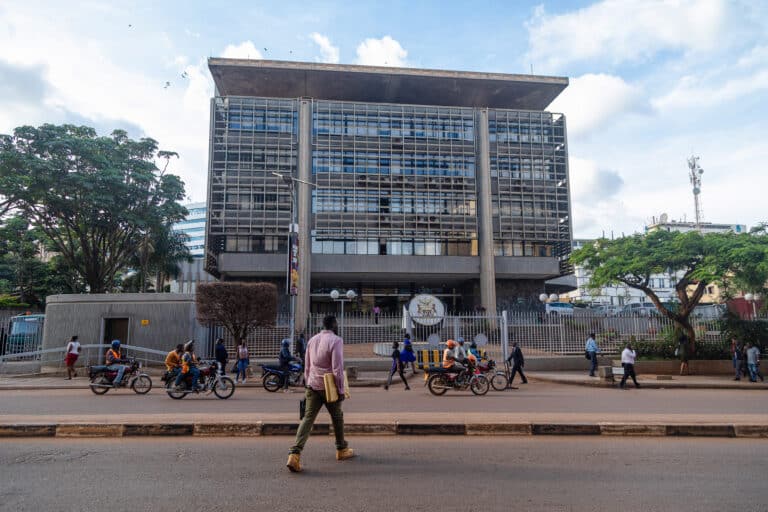
The Bank of Uganda is scheduled to auction three Uganda Government Treasury Bond re-openings on Wednesday, August 26, 2026, giving investors exposure to three different investment horizons.
The reopening covers a 2-year, 5-year and 15-year Treasury Bond, with a combined offering amount of UGX 990 billion.
For investors considering government securities, the auction provides an opportunity to understand the different maturities, coupon rates, taxation and investment horizons available in the current market.
The three Treasury Bonds being reopened
According to the Bank of Uganda’s Scheduled Auction Invitation to Tender, the securities are:
| Treasury Bond | Coupon Rate | Maturity | Offering Amount | Withholding Tax |
|---|---|---|---|---|
| 2-Year | 15.250% | 16 Nov 2028 | UGX 230 billion | 20% |
| 5-Year | 15.000% | 20 May 2032 | UGX 330 billion | 10% |
| 15-Year | 15.800% | 23 June 2039 | UGX 430 billion | 10% |
These are re-openings, meaning the government is offering additional amounts of existing Treasury Bond securities rather than introducing entirely new securities.
The securities have the following ISIN codes:
- UG0000001376 – 2-Year Treasury Bond
- UG12J2005328 – 5-Year Treasury Bond
- UG12K2306393 – 15-Year Treasury Bond
When is the Uganda Treasury Bond auction?
The auction is scheduled for:
Auction date: Wednesday, August 26, 2026
Settlement date: Thursday, August 27, 2026
The Bank of Uganda states that Primary Dealer Banks and other commercial banks must submit competitive and non-competitive bids through the Central Securities Depository by 10:00 a.m. on August 26, 2026.
It is important to distinguish the auction submission process from the process an individual investor may use to access Treasury Bonds through an investment platform or other authorised channel.
What is a Treasury Bond?
A Treasury Bond is a government security issued to raise money.
In simple terms, when you invest in a Treasury Bond, you are lending money to the government for a specified period. In return, the bond provides coupon interest according to its terms, while the principal is repaid according to the security’s maturity terms.
Treasury Bonds can therefore form part of a long-term investment portfolio, particularly for investors looking for exposure to government securities.
However, the fact that a bond is issued by government does not mean investors should ignore the investment terms.
Before investing, it is important to understand the maturity, coupon, price, yield, taxation, liquidity and how the investment fits into your financial goals.
Understanding the 2-Year Treasury Bond
The first reopening is the 15.250% 2-Year Treasury Bond maturing on November 16, 2028, with an offering amount of UGX 230 billion.
Its ISIN is UG0000001376 and the stated withholding tax is 20%.
A shorter maturity can be relevant for investors who have a defined financial horizon and do not want to commit their investment for as long as a 5-year or 15-year security.
The coupon rate alone, however, should not be treated as the same thing as the investor’s actual return.
The price paid for the bond affects its yield.
Understanding the 5-Year Treasury Bond
The second reopening is the 15.000% 5-Year Treasury Bond maturing on May 20, 2032.
The offering amount is UGX 330 billion, and the stated withholding tax is 10%. Its ISIN is UG12J2005328.
A 5-year maturity sits between the shorter-term 2-year bond and the much longer 15-year bond.
For an investor, the appropriate maturity depends on when the money may be needed and the role the investment is expected to play within the wider portfolio.
Understanding the 15-Year Treasury Bond
The longest security in this reopening is the 15.800% 15-Year Treasury Bond maturing on June 23, 2039.
The Bank of Uganda has announced an offering amount of UGX 430 billion, with a stated withholding tax of 10%. Its ISIN is UG12K2306393.
A 15-year Treasury Bond represents a significantly longer investment horizon.
This type of investment requires investors to think carefully about their long-term objectives and liquidity needs before committing capital.
Longer maturity does not automatically mean better.
The right investment depends on the investor’s objectives, risk tolerance, liquidity requirements and overall portfolio.
What does the coupon rate mean?
The coupon is the interest rate attached to the bond.
For this auction, the stated coupon rates are:
- 15.250% for the 2-year bond
- 15.000% for the 5-year bond
- 15.800% for the 15-year bond
However, investors should not confuse the coupon rate with the bond’s yield.
The Bank of Uganda notice specifies that competitive bids are submitted using a price per 100, expressed to three decimal places. The allocation is made at one price, based on the lowest auction price per 100 corresponding to the highest accepted auction yield.
This means the price at which a bond is acquired matters when assessing its effective return.
How much is being offered?
Across the three Treasury Bond re-openings, the Bank of Uganda has announced:
UGX 230 billion
2-Year
UGX 330 billion
5-Year
UGX 430 billion
15-Year
That’s a combined UGX 990 billion in the three announced offerings.
The Bank of Uganda also reserves the right to increase or reduce the amount offered and to accept or reject applications in part or in whole.
What investors should consider before investing
A Treasury Bond should be evaluated as part of your broader financial plan rather than by looking at the coupon rate alone.
Consider:
1. Your investment horizon
When will you need the money?
A 15-year security is fundamentally different from a 2-year security because of the length of time your investment is committed.
2. Liquidity
Consider how easily you may need access to your money before maturity and what that could mean for your investment.
3. Price and yield
The coupon is only one part of the picture.
The price paid for the bond affects the yield an investor receives.
4. Tax
The Bank of Uganda notice specifies different withholding tax rates for the three securities:
- 20% for the 2-year bond
- 10% for the 5-year bond
- 10% for the 15-year bond
5. Portfolio diversification
A Treasury Bond can be one component of a broader investment portfolio.
Your investment strategy should consider how different assets work together rather than relying entirely on one investment.
What happens on August 26?
The scheduled auction takes place on Wednesday, August 26, 2026.
The Bank of Uganda notice states that Primary Dealer Banks and other commercial banks submit competitive and non-competitive bids through the CSD by 10:00 a.m.
The announced minimum bid amounts are:
- Competitive bid: UGX 200,100,000
- Non-competitive bid: UGX 100,000
The notice also states that only Primary Dealer Banks are allowed to submit competitive bids into the auction. The listed Primary Dealers are Absa Bank, Citi Bank, Centenary Bank, DFCU Bank, Equity Bank, Housing Finance Bank, Stanbic Bank and Standard Chartered Bank.
For individual investors accessing government securities through an investment platform or other authorised route, the relevant process may differ from the institutional auction submission process.
The bigger picture for investors
The reopening of these three Treasury Bonds gives investors a useful opportunity to compare different investment horizons.
The question isn’t simply:
“Which bond has the highest coupon?”
A better question is:
“Which investment fits my financial goals, time horizon and portfolio?”
Someone with a short-to-medium-term goal may have different requirements from someone building a portfolio for a long-term objective.
Understanding the investment before committing your money is one of the most important principles of investing.
Explore your investment options with Level Africa
Level Africa provides investors with access to investment opportunities across different asset classes and investment objectives.
Our investment products include:
If you’re considering investing, take time to understand your options and choose investments that align with your financial goals.
This article is based on the Bank of Uganda’s Scheduled Auction Invitation to Tender dated August 13, 2026. Investment terms and auction outcomes are subject to the official Bank of Uganda process. This article is for general financial education and does not constitute personalised investment advice.